Easy Restaurant — Restaurant Management System
A multi-tenant, multi-branch restaurant SaaS project covering menus, ordering, kitchen workflows, payments, and inventory.
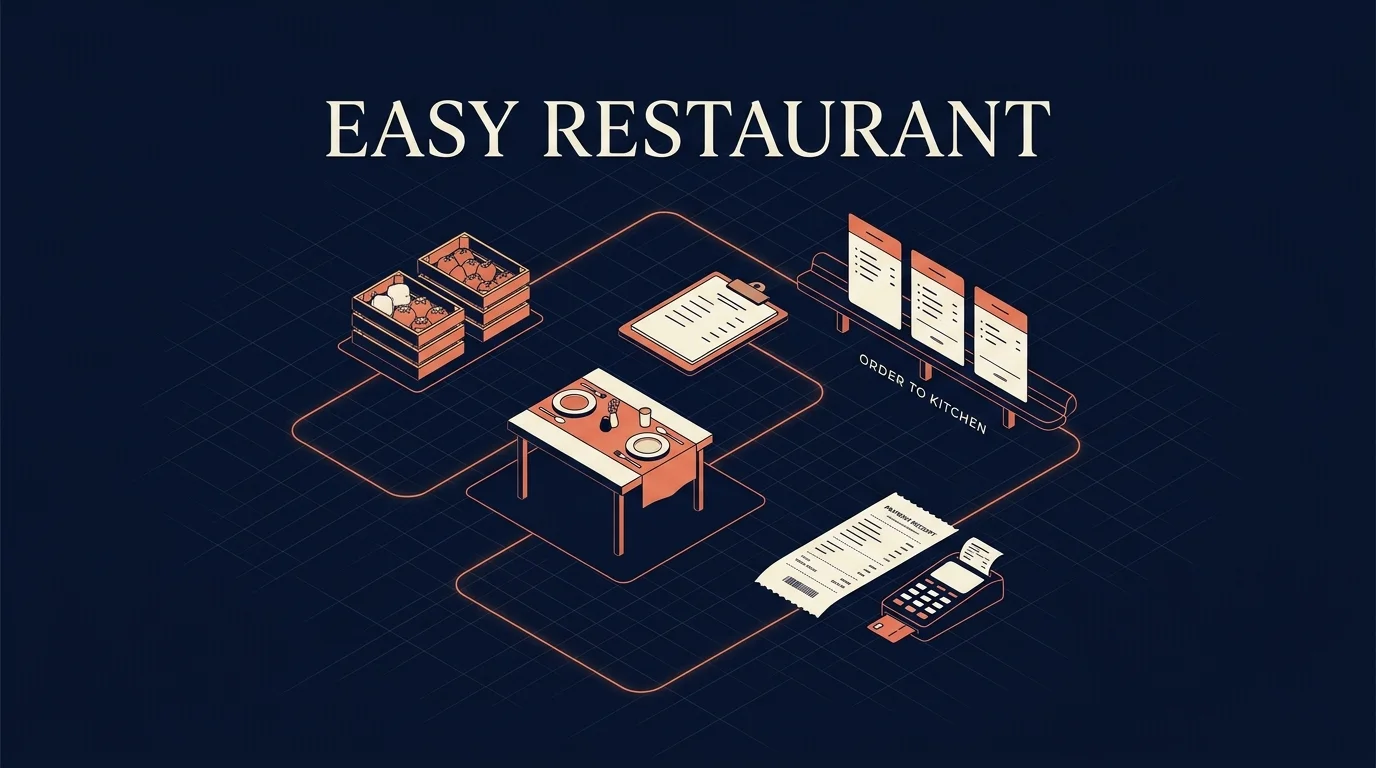
The cover is an AI-generated concept illustration, not a screenshot. The kitchen screenshot below comes from a repository UI test using demo data.
The problem: keeping restaurant workflows in sync
An order moves through several roles: a guest or staff member submits dishes, the kitchen accepts and prepares them, service staff track progress, and the cashier takes payment. Meanwhile, dishes may be added, cancelled, or split into another order. Repeated submissions and stale screens can cause inconsistencies if each part of the system acts on a different view of the order.
Easy Restaurant is a personal multi-tenant, multi-branch restaurant SaaS project. Its focus goes beyond CRUD to the consistency of order, kitchen, and inventory workflows.
Product capabilities
- Administration: organizations, branches, accounts, roles, and access scope.
- Menus and tables: categories, dishes, tables, and guest ordering.
- Kitchen: active orders, dish status, and additional ordering batches.
- Checkout: payments, invoices, refunds, and reporting.
- Inventory: ingredients, suppliers, purchasing, and recipe quantities.
- Customers: profiles, promotions, and loyalty.
Kitchen display system
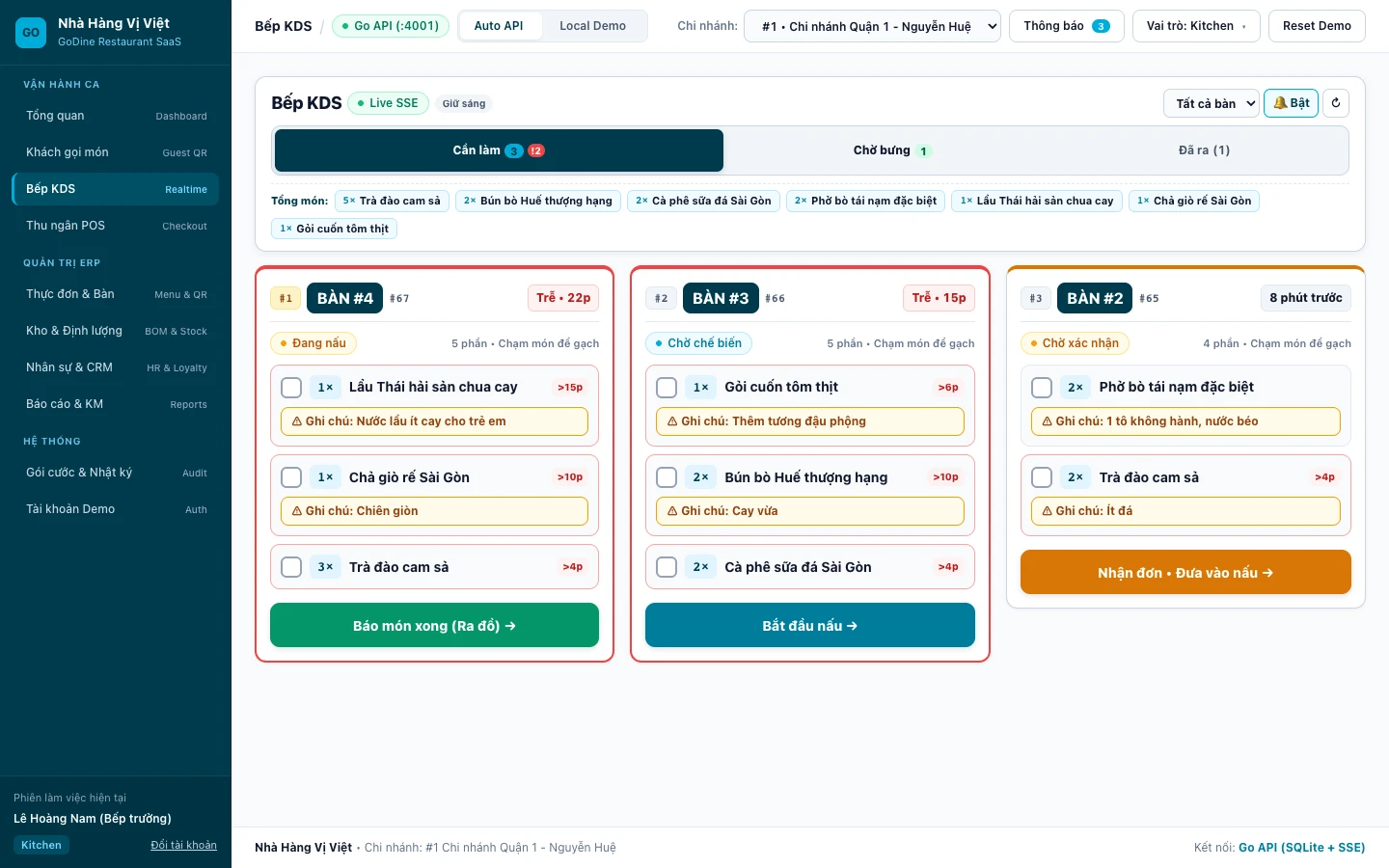
Captured in the project's UI testing environment with demo data. Cards show tables, dishes, notes, and status actions; this is not live customer operating data.
The kitchen screen places status information and primary actions alongside each order. Branch and status filters narrow the work queue. Server-Sent Events deliver updates, while the backend still validates transitions rather than trusting the state of an open browser screen.
Architecture
| Component | Technology |
|---|---|
| Frontend PWA | React, TypeScript, Vite, Panda CSS |
| Backend | Go, Chi |
| Persistence | SQLite, raw SQL, embedded migrations |
| Authentication | JWT access/refresh tokens, bcrypt |
| Event updates | Server-Sent Events |
Three engineering challenges
Preventing duplicates when users retry
Order creation and item-append APIs support Idempotency-Key. Retrying the same submission after a timeout can return the stored result instead of adding dishes twice. Reusing a key with different input produces a conflict. Successful responses are stored transactionally with the order changes.
Rejecting actions from stale kitchen screens
Kitchen actions carry the displayed status and ordering-batch identifier. If the underlying data has changed, the backend returns a conflict so the interface can refresh. Completing one batch therefore does not accidentally complete dishes added in a newer batch.
Separating ingredient reservations from physical stock
Open orders reserve ingredient demand according to dish recipes. Physical stock and outbound movements change at payment. Cancelling dishes releases reservations, while splits and table transfers must conserve reserved demand. Recipe edits and stock reductions cannot invalidate the requirements of unfinished orders.
Scope and verification
Repository documentation describes tests for migrations, validation, rate limiting, tenant isolation, and multi-item guest orders. The screenshot demonstrates the interface in a demo environment, not commercial production adoption. API print status is metadata and does not establish physical printer integration.
A public demo will be added later. Source code is not linked, and no unmeasured performance improvements are claimed.